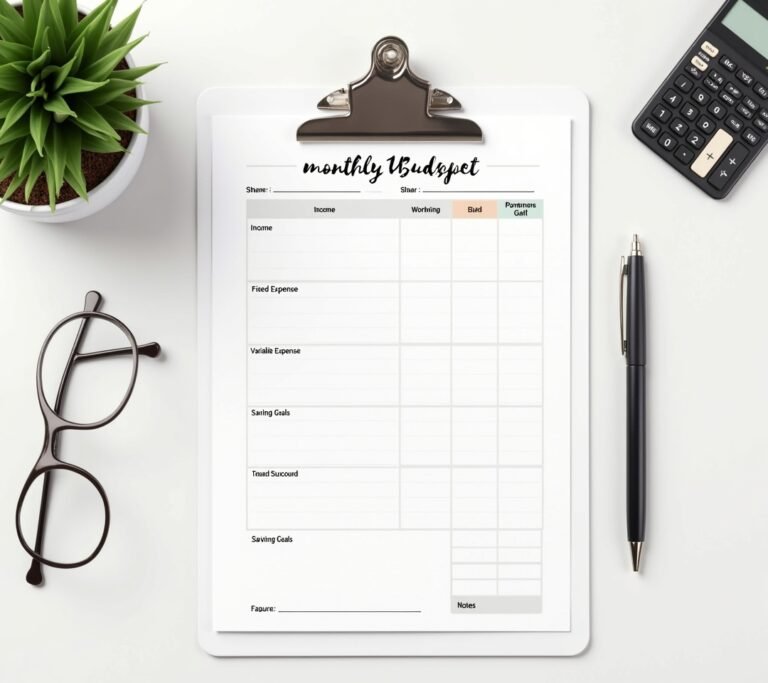
I’ll be honest with you—I used to think budgeting worksheets were for boring people. You know, the type who actually enjoy spreadsheets and color-coded folders. Then I hit 35 with basically nothing in savings and realized maybe those boring people were onto something!
A financial goals worksheet isn’t just another piece of paper to ignore. It’s actually the thing that helped me pay off $12,000 in credit card debt in 18 months. So yeah, I’m a convert now.
What Exactly Is a Financial Goals Worksheet?

Think of it as a roadmap for your money. A financial goals worksheet is basically a document where you write down what you want to achieve financially, break those dreams into smaller steps, and track your progress along the way.
It can be as simple as a handwritten list or as fancy as a detailed spreadsheet. The Consumer Financial Protection Bureau offers some great free templates if you don’t wanna start from scratch. I personally started with something super basic—just a notebook page divided into three columns.
My Biggest Mistake (And How the Worksheet Fixed It)
Here’s where I messed up royally. For years, my financial goal was just “save more money.” That’s it. Super vague, right? No wonder I never got anywhere.
When I finally sat down with an actual financial planning worksheet, I had to get specific. Instead of “save more,” I wrote “save $500 monthly for emergency fund until I reach $10,000.” Game changer, honestly. The worksheet forced me to attach real numbers and deadlines to my dreams.
I also realized I was trying to do everything at once. Pay off debt, save for retirement, build an emergency fund, save for vacation—all simultaneously. The worksheet helped me prioritize and focus on one money goal at a time.
How to Create Your Own Financial Goals Worksheet
Alright, let’s get practical here. You can totally make one yourself in about 20 minutes.
Start by listing ALL your financial goals—big and small. Dream house? Write it down. New laptop? Yep, that too.
Next to each goal, write the total amount needed and your target date.
Calculate how much you need to save monthly to hit each target.
Rank your goals by priority. Be honest about what matters most to you.
Create a tracking section where you can log your progress weekly or monthly.
The folks at NerdWallet have excellent resources on setting SMART financial goals that work perfectly with any worksheet format.
Short-Term vs Long-Term Goals
This tripped me up for awhile. You gotta separate your goals into timeframes or you’ll feel overwhelmed constantly. Short-term goals are stuff you want within a year—like building that emergency fund or paying off a specific credit card.
Long-term goals might be retirement savings, buying a home, or funding your kid’s education. Your budget planning worksheet should have sections for both. Trust me on this one.
Watch This Before You Start
I found this video super helpful when I was getting started with goal setting for my finances. Check out this explanation from Two Cents on PBS about financial goal setting basics. It really breaks things down in a way that doesn’t make your eyes glaze over.
Tips That Actually Work

Review your worksheet weekly. Seriously, don’t just create it and shove it in a drawer like I did the first time. I check mine every Sunday morning with my coffee now.
Also, celebrate small wins! When I hit my first $1,000 saved, I treated myself to a nice dinner. Nothing crazy, but enough to feel like progress was being rewarded. Your personal finance goals should feel achievable, not punishing.
Don’t be afraid to adjust. Life happens, and your worksheet should be flexible enough to handle unexpected expenses or changes in income.
Your Money Journey Starts Now
Look, a financial goals worksheet won’t magically make you rich overnight. But it will give you clarity and direction that’s honestly priceless. The simple act of writing down your goals makes them feel real and achievable.
Customize your worksheet to fit YOUR life—there’s no one-size-fits-all approach here. Just be honest with yourself about what you want and what you can realistically accomplish. If you found this helpful, swing by Dollar Docket for more practical tips on getting your financial life together!